
Welcome to my blog! I am a recent Mummy to my gorgeous baby girl and a presenter based in the midlands! Join me in this adventure where I will be sharing my thoughts and findings as a new Mum, and waffle on about anything else I find remotely interesting 🙂
School Funding: Are ‘record high’ school budgets enough for schools to thrive?
The government claims that school funding is at an all-time high, so why are schools having to dip into their reserves or find alternative ways to subsidise their spending? We explore the impact of diminishing budgets in schools.
(Source of graphs: .gov)
What is the NFF?
The National Funding Formula (NFF) is a method the Department of Education uses to determine how much each state-funded mainstream school should receive. It employs a ‘building blocks’ approach to arrive at a final figure.
Not all schools receive the same amount of money, as funding is tailored based on the needs of the pupils attending each school.
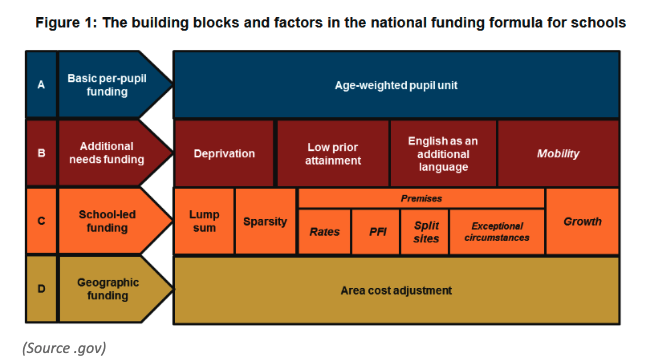
The DfE publishes figures during the summer to local authorities as an early indication of the amount of money each school is set to receive, known as a notional budget.
According to The Key, the DfE figures are based on previous pupil data from the last year’s census, which may not accurately reflect the needs of the school for the current year. Local authorities then use the most recent data from October to determine each school’s potential allocation. Therefore, census data from 2021-2022 will be used for the 2023 – 2024 fund allocation.
The system is currently undergoing a transition, with the government implementing a single national funding formula known as the direct NFF. The DfE explains:
“Local authorities would no longer use their own formulas to allocate final funding, and schools’ budgets would be set directly by the NFF. This means that funding will be better matched to the needs of schools, regardless of their location.”
The government hopes this single funding formula will lead to a fairer and more consistent funding model for schools.
We contacted Solihull council for a statement, but they refused to give one at this time.
The Government’s Promise
Based on data shared by the government, the total core schools’ budget announced in the Autumn Budget 2022 indicated an extra £2.3 billion of revenue funding for the current academic year (2023-24), with a similar increase planned for 2024-25.
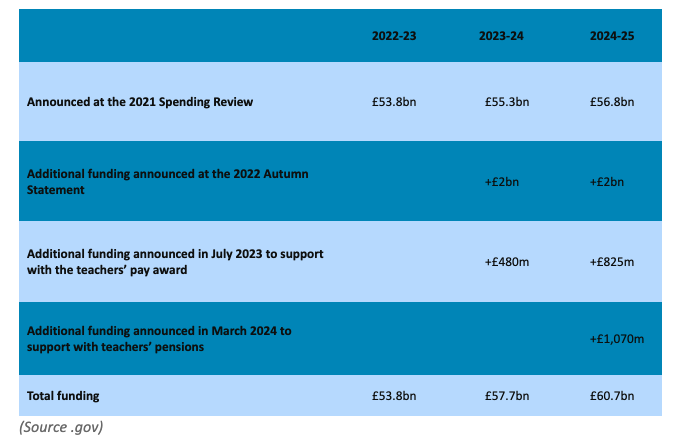
However, according to the Institute for Fiscal Studies (IFS), while the claim that school funding is at a record high is technically true, it’s not much of an achievement.
The IFS states, ” Governments loathe to make real terms cut to total school spending, which means that governments appear unwilling to reduce the amount of money allocated to schools when adjusted for inflation or other economic factors (real terms).”

Not Enough Money for Schools
A head teacher from Solihull describes the situation: “Once upon a time, we could cover everything from our budget allocation and still have a decent sum to put towards our reserves, but in recent years, we’ve had to regularly dip into our reserves to pay for things that were once comfortably covered by the funds we received from the council.”
She adds that the strain on school expenditure has increased as costs have risen. According to the Office for National Statistics (ONS), the annual CPIH inflation rate was 4.2% in the year to January 2024.
She joins many schools that are struggling to manage the costs of running a school on tight budgets. “We find ways to keep bills down, such as turning off radiators when the rooms aren’t in use.”
The IFS adds, “The actual costs faced by schools are growing faster than overall inflation, making the challenges to school budgets much more significant than when using standard measures of inflation to calculate real-terms changes in school funding per pupil.”
‘Stop School Cuts’ is an organization run by the National Education Union and campaigns to prevent school funding cuts. Their research found that since 2010, 70% of schools have experienced funding reductions.
Let’s look at the West Midlands as an example.
Thinking outside of government funding
In addition to the budget schools receive from the government, schools can raise money independently through various streams such as Parent Teacher Associations (PTAs), parent funds, childcare, and school lettings. These additional sources of income supplement the budget and help fund initiatives.
PTAs fall under the Charity Act of 2022, requiring them to declare any funds raised over £5,000. According to Oliver Reed, Head of Memberships at Parentkind, “PTAs contribute an average of £9,000 to schools, providing much-needed income during times of austerity.”
Funds are raised through parent contributions towards various school-led initiatives.
When asked where this money is spent, the Headteacher replied, “The funds help finance ‘luxuries’ such as playground installations and contributions towards school trips. Therefore, we must be creative in raising extra funds and careful in our spending.”
Affluence versus Deprivation in School Fundraising
Since funds come from parents’ pockets, the cost of living affects how much people can comfortably give. The National Parent Survey, conducted by YouGov on behalf of Parentkind, revealed that one in four parents struggles with the everyday costs of sending their children to school.
Created in Canva
Furthermore, the Index of Multiple Deprivation (IMD) measures the relative deprivation of areas in England, ranking areas from most affluent (10) to most deprived (1). Parentkind used IMD data based on school location/postcode and matched it against schools with PTAs in membership.
The data shows that affluent areas tend to have more active PTAs, but participation can vary based on parental involvement and community support.
Impact on Teachers
Returning to the budget, most of it gets allocated towards salaries and benefits for teachers and staff, as well as classroom resources and energy costs.
Teacher pay and funding have been in dispute for over a decade, leading to multiple strikes and union actions. The argument is that teachers are not paid enough relative to their workload and the cost of living.
Paul Whiteman, general secretary of the National Association of Head Teachers, told the Shropshire Star that England currently has the highest number of unfilled teaching posts in over a decade, with one in seven schools reporting at least one vacancy.
He added, “The Government needs to send a clear signal to the workforce that change is coming, starting with an urgent double-digit pay increase.”
According to the School Teachers’ Review Body (STRB), vacancies more than doubled between 2020 and 2022, from 1,098 to 2,334. To address this, a cash injection into the sector was announced in the Autumn 2022 budget, with teachers receiving a 6.5% salary increase from September 2023.
However, as of April this year, talks of fresh rounds of strikes have emerged as the dispute over pay and funding continues. The warning came from Daniel Kebede, general secretary of the National Education Union (NEU), the largest education union in the UK, according to Wales Online. Teachers are set to receive a 1.5% pay increase in 2024-2025, as announced in the last budget.
There was an ‘overwhelming’ majority of NEU members across the UK who participated in a ballot to determine if teachers would strike again for a higher-than-inflation pay rise and improved funding. Wales Online reported that over 50% of members participated in England, with over 90% indicating they would strike for fairer pay.
More Cash Needed
After 14 years of Conservative government, and with a general election looming, negotiations may take a different turn under a new administration. However, the UK is currently grappling with a cost-of-living crisis, resulting in significant strain on schools. Government funding falls short when measured against inflation and real-terms school expenditure.
According to the Institute for Fiscal Studies (IFS), an additional £700 million is needed in 2024–25 to fully compensate schools for cost increases. Moreover, an extra £3.2 billion in funding is required to counteract the decline in purchasing power for school budgets since 2009–10.
If you wish to learn more about school funding, you can click here.

