The data indicates that since 1970, UK species have, on average, declined by approximately 19%.
Nearly 1 in 6 species (16.1%) out of the 10,000+ species measured now facing the threat of extinction.
The State of Nature report, published every four years, compiles data from across the UK and provides a comprehensive overview of the state of biodiversity in the UK.
One in six species is at risk of disappearing from Great Britain.
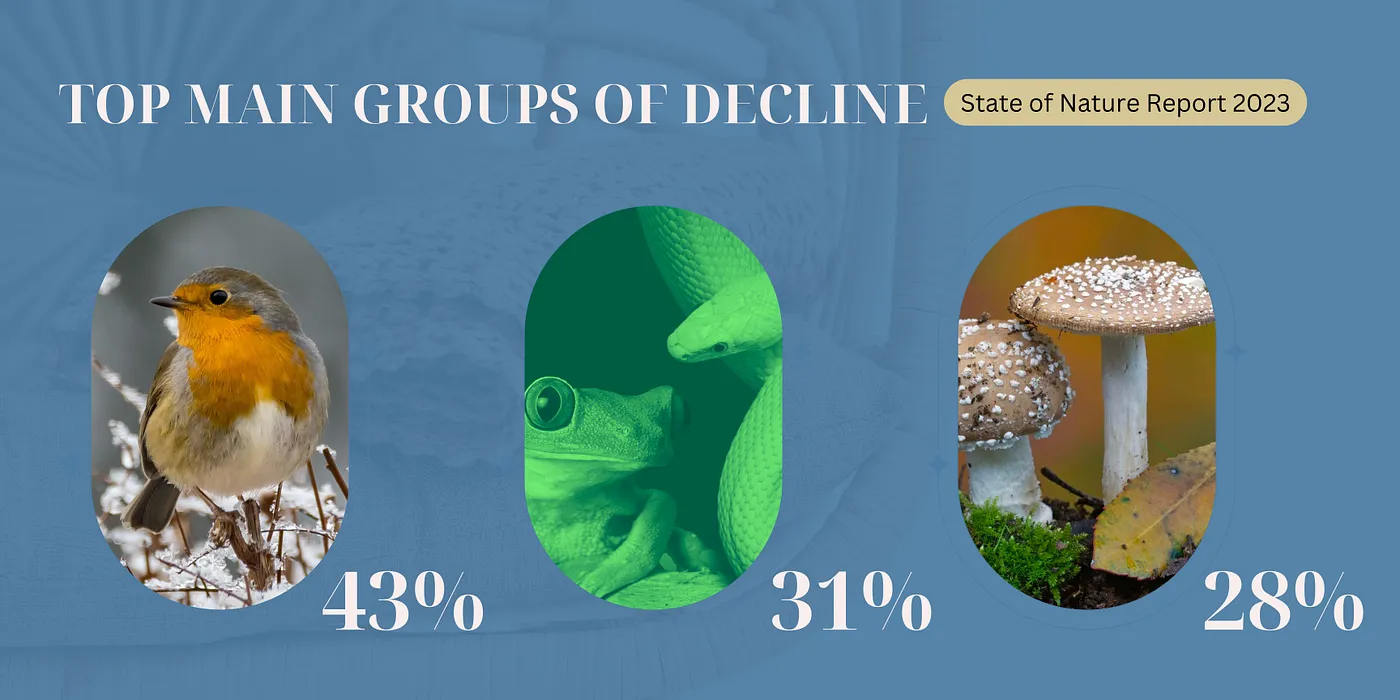
According to the report, the top groups showing the most significant declines include birds, amphibians, reptiles, fungi, and lichen.
Dr. Pete Brotherton, Director of Science at Natural England, commented,
“This is a timely reminder, if needed, that the nature crisis is not limited to far-off places like the Amazon or the Great Barrier Reef. It is right here, on our doorstep.”
The decline goes further
Pollinators, such as bees, hoverflies, and moths, have decreased by an average of 18%, while predatory insects, like the two-spot ladybird, which helps control crop pests, have declined by more than a third (34%). In addition, 54% of flowering plants and 59% of bryophytes across Great Britain have decreased in the areas they are typically found.
Important work
The findings of the State of Nature report span approximately 50 years and are collected by a network of conservationists, volunteers, and scientists. From this extensive dataset, the State of Nature (SON) reports,
“The UK is now one of the most nature-depleted countries on Earth.”
Beccy Speight, the Royal Society for the Protection of Birds Chief Executive, adds,
“The UK’s wildlife is better studied than in any other country in the world, and the data should compel us to pay attention. What is clear is that the progress made in protecting our species and habitats has not been sufficient, and yet we urgently need to restore nature to address the climate crisis and build resilience.”
There is hope
The report indicates that while there have been significant declines in biodiversity across the UK, it also provides a better understanding of how these trends can be reversed and conservation efforts can be strengthened. The report states,
“We have never had a better understanding of the State of Nature and what is needed to rectify it.”
Main causes
The main causes of this decline are centuries of habitat loss, development, and persecution, which have taken a toll on the UK’s natural environment long before comprehensive data collection began in 1970.
However, climate change and the way we manage our land for farming are the primary factors contributing to the decline in wildlife on land and in water.
Making important changes
Efforts to make important changes are ongoing. The valuable work carried out by experts allows them to advise on how we can make positive changes for our wildlife. RSPB’s Chief Executive, in her comments stated,
“We know that conservation works and how to restore ecosystems and save species. We need to move much faster as a society towards nature-friendly land and sea use; otherwise, the UK’s nature and wider environment will continue to decline and degrade, with significant implications for our own way of life. It is only through working together that we can help nature recover.”
Global efforts
This report emphasises the importance of a global effort to protect nature by referencing the ‘30/30 framework’ — the Kunming-Montreal Global Biodiversity Framework. This UN-backed scheme aims to halt and reverse biodiversity loss by 2030.
This framework was agreed upon at the Convention on Biological Diversity (CBD) during COP15 in 2022, and it calls for nations to commit to protecting 30% of their land and seas for nature by 2030.
For more information on the report, please visit the website for the full breakdown for the State of Nature report 2023.